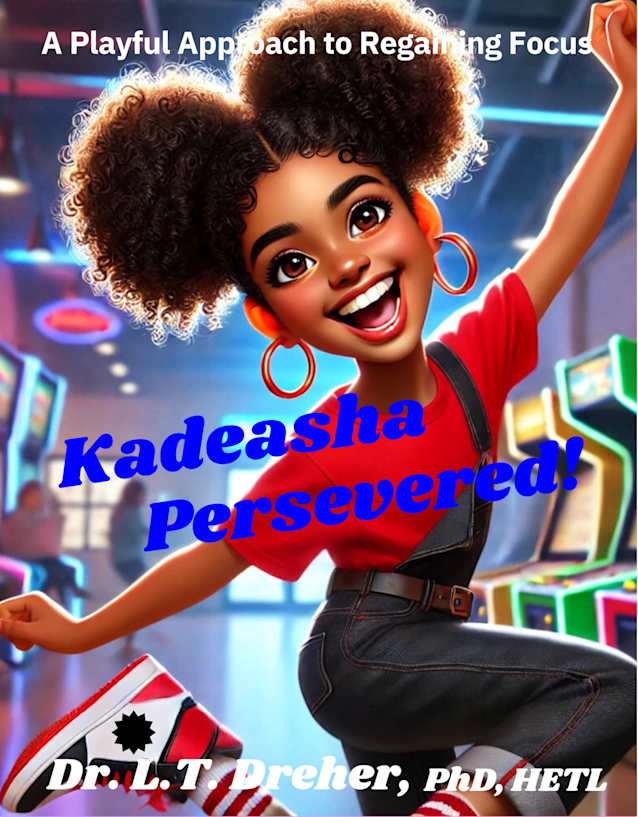
Kadeasha Persevered!: A Playful Approach to Regaining Focus
About
If your child, friend, or family member has been diagnosed with ADHD, and it is affecting their behavior, schoolwork, social capabilities, confidence levels, and more, this picture storybook is for you! This book offers a supportive, caring, and optimistic blueprint for parents, teachers, and others to learn about ADHD. – Dr. L.T. Dreher, Ph.D., HETL
Kadeasha has uncontrollable energy, can’t seem to focus, is losing friends, and is struggling to control her emotions. She wants to be calm and able to focus like her classmates, but she can’t seem to tame her mind and body. Her goal this year was to do her absolute best in school, achieving awesome grades to impress her parents. However, this new scary situation has her feeling afraid, confused, and misunderstood. In this inspiring story, see how Kadeasha perseveres with the love and support of her friends, family, and community.
This picture storybook offers delightful images and content designed to encourage and teach those living with ADHD. It provides calm and fun ways to apply methods, techniques, and resources to help balance their brain’s neurotransmitters and receptors.
SUGGESTED WAYS TO NATURALLY STABALIZE ADHD SYMPTOMS: This book offers suggestions on how to NATURALLY stabilize Dopamine (motivation/focus/pleasure), Serotonin (emotions/metabolism), and Norepinephrine (fight or flight/retention/distractions) neurotransmitter deficiencies in the brain of someone diagnosed with ADHD.
PLAY-BASED TEACHING AND LEARNING: Children with ADHD have no idea why they can’t control their minds, emotions, and bodies. The character in this book engages children by offering a fun and playful format to maintain their focus, while learning about ADHD. They’ll learn how to naturally calm ADHD symptoms and how to support and be a good sibling or friend to someone with ADHD.
MULTIPLE WAYS TO TEACH AND LEARN: Teachers can supplement this book with their curriculum and assess students on ADHD coping methods and calming techniques. Librarians can read this book at their weekly children’s interactive sessions to encourage the children to discuss their favorite ways of calming their minds and bodies, and if they have siblings or friends with ADHD, the librarians can ask how they usually support them. PE Teachers can explain to their students how each activity in the book affects their mind, body, and emotions while simultaneously performing indoor or outdoor activities.
BUILDING PARENT/CHILD RELATIONSHIPS: Parents of children with ADHD can use this powerful story to develop a bond with their struggling child. They can help the child better understand what is happening in their brain, which can remove the stigma of ADHD. The ADHD Quick Facts, listed at the end of the book, offers parents an accelerated, yet effective way to learn more about ADHD. This book can assist parents with inspiring and boosting their child’s confidence by showing them how smart they are, reassuring them that being different is beautiful and special, and by offering them a sense of hope and encouragement.